The Climate Solutions Research Collective is excited to share the recipients of the 2026 Climate Catalyst Awards. The Catalyst Awards provide seed funding to grow and strengthen collaborative climate solutions research across disciplines at UBC.
Early Career Researcher Winners
Catalyst awards of $10,000 each were awarded to:

Adeniyi Asiyanbi
Irving K Barber Faculty of Arts and Social Sciences
Dr. Adeniyi Asiyanbi studies climate justice at the intersection of climate change and forests, examining both how forests are being reshaped into spaces for carbon offsetting and how wildland-urban interfaces create wildfire risk. His project tackles a striking gap: how wildfires affect racialized immigrants in British Columbia and Alberta, a fast-growing population whose risk perceptions and adaptation barriers remain largely understudied. With the award, Dr. Asiyanbi aims to map affected communities and synthesize existing evidence, while leading consultations with community leaders across four major wildfire sites. These early relationships will shape locally relevant tools and resources for building wildfire resilience and adaptive capacity. The work lays the groundwork for future research directions and new partnerships with collaborators both inside and beyond UBC.

McKenzie Kuhn
Faculty of Arts
Dr. McKenzie Kuhn investigates how climate change is reshaping carbon cycling in northern ecosystems, monitoring how greenhouse gases are stored, transported, and released from Arctic ecosystems as the region warms. Her project targets an overlooked piece of the puzzle: retrogressive thaw slumps, rapidly expanding permafrost features that release previously stored carbon-rich material to the environment. Upon release, this carbon can be transformed in to greenhouses gasses or transported downstream, ultimately increasing regional and global carbon emissions. Working with PermaC Land and Environment Inc, Dr. Kuhn's group will use field-based techniques to quantify carbon storage and emissions at permafrost thaw sites with and without PermaC's innovative mitigation technology. The ultimate goal of this research is to produce empirical evidence for the carbon-avoidance potential of permafrost thaw slump mitigation efforts as a natural climate solution. The award supports a preliminary field campaign and relationship-building.

Karthik Akkiraju
Faculty of Applied Science
Dr. Karthik Akkiraju works at the intersection of materials design, environmental assessment, well-being, and public policy, developing frameworks that define the material resources needed for a good life within equitable ecological limits. His project shifts from his bottom-up work on individual lifestyles to a top-down question: have real-world policies actually reduced material demand and emissions while improving well-being? Focusing on North American cities, he will compile and evaluate city-level demand-side policies, and assess their measurable outcomes. The result will be an open-access dataset of demand-side climate solutions, paired with an op-ed and roadmap for city planners. Developed with Dr. M.V. Ramana (School of Public Policy and Global Affairs), the project formalizes a new UBC collaboration and seeds future grant applications.
Knowledge Exchange Winners
Catalyst awards of $2,500 to $5,000 each were awarded to:

David Tindall
Faculty of Arts

Heidi Tworek
Faculty of Arts
Building a Climate Advertising Dashboard: A UBC–TMU Knowledge Exchange Collaboration
This project brings together UBC's Climate Disinformation and Obstructionism Research Cluster and the Social Media Lab at Toronto Metropolitan University to lay the groundwork for a public dashboard tracking Facebook and Instagram ads on climate change and climate policy. The tool would surface key advertisers, common messaging frames, ad spend, and audience reach, turning complex advertising data into insights the public can actually use. The team will host a Fall 2026 workshop at UBC featuring Social Media Lab director Anatoliy Gruzd, who will demonstrate the Lab's existing migration ad dashboard as a working model. A pre-workshop focus group with government, civil society, and First Nations representatives will help shape the design, and a student training session will round out the visit. The work will produce a policy report and an op-ed, while setting up a larger monitoring initiative. Additional partners: Laura Nelson (Associate Professor, Department of Sociology), Chris Tenove (Assistant Director of the Centre for the Study of Democratic Institutions).

Robert VanWynsberghe
Faculty of Education

Will Valley
Faculty of Land and Food Systems
Climate Change Education: An International Perspective
This project gathers international scholars and practitioners working on community-based climate action, food security, and just transitions, and turns their expertise into teaching resources for UBC students, educators, and community partners. Through professionally recorded interviews and live Q&A sessions, it makes globally diverse climate solutions accessible, with particular attention to Global South and Indigenous knowledge systems. Following a successful pilot, the Catalyst Award will contribute to advancing a larger two-year speaker series. The Catalyst award will directly support two featured speakers in the series, namely Dr. Pierre Paul Audate of the Université de Montréal, whose work spans food security and urban agriculture across Quebec, Haiti, and Ecuador, and Kailea Frederick, a Native Hawaiian climate educator working on just transitions and policy change. The team will produce two video modules and two interactive sessions, then embed them into graduate courses, teacher professional development, and broader programming. The goal is to move past one-way information sharing toward genuine dialogue, helping develop graduates ready to advance low-carbon and resilient futures.

Sean Smukler
Faculty of Land and Food Systems

Juliet Lu
Faculty of Forestry and Environmental Stewardship
Coordinating Climate-Relevant Policy Engagement within the Centre for Sustainable Food Systems
With Canada's Agricultural Policy Framework nearing the end of its term, this project seizes a timely opening to keep climate mitigation, adaptation, and resilience central to the next framework. Researchers at the Centre for Sustainable Food Systems produce extensive climate-relevant work with clear policy implications, but the Centre lacks shared infrastructure to translate that research into coordinated, well-timed engagement. The project addresses this through a short facilitated workshop series. The first session will identify priority policy issues and clarify how the Centre's research can best contribute to climate policy solutions. The second will put the strategy into practice by coordinating a Centre response to the federal consultation on the next framework. Expected outcomes include a Centre-wide policy engagement strategy, a set of practical tools and reference materials, and a draft federal policy response ready for submission. The work builds collective capacity rather than relying on scattered individual efforts. Additional partners: Risa Sargent, Associate Professor (Faculty of Land and Food Systems).

Bavisha Kalyan
Faculty of Applied Science

Theodore Lim
Faculty of Applied Science
Grounded Infrastructure Symposium: Co-Creating Climate Resilience with Communities
This project convenes a UBC symposium and workshop for researchers, practitioners, and community partners to tackle a gap in community-based engineering for climate-resilient infrastructure. Civil and environmental engineering offers little structured space to examine how participatory approaches shape the design, building, and long-term resilience of infrastructure, especially for communities that have historically been left out of decisions about the systems they depend on. Research shows that meaningful participation produces infrastructure that works better and earns greater public trust, which matters as communities face growing climate variability. Ahead of the symposium, the core team will complete a systematic review of community-based and participatory engineering approaches, including Indigenous research methods. The symposium workshop will then explore key gaps, opportunities, and the resources needed to move this work forward. Outputs include a white paper setting priorities for the field and stronger interdisciplinary collaborations to support future funding proposals. Additional partners: Danilo Caron (UBC Civil Engineering).

Janny Xue Chen Ke
Faculty of Medicine
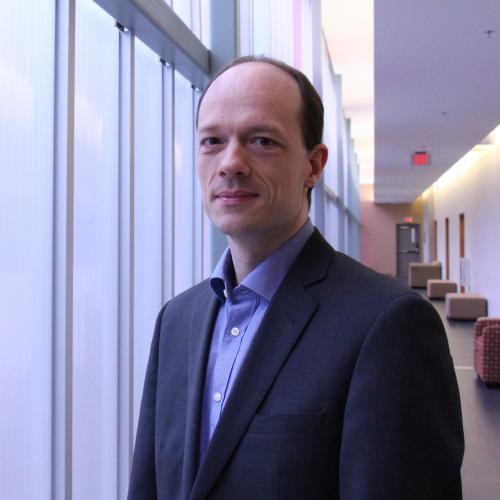
Matthias Görges
Faculty of Medicine
Engagement, and Knowledge Dissemination of Mitigation Strategies for the Impact of Climate Change on Health
Climate change is already disrupting healthcare and harming patients, from extreme heat and wildfire smoke to storms and flooding that cut power and limit access to surgical and emergency care. British Columbia saw 619 deaths directly tied to the 2021 heat wave. Yet responses have stayed siloed, with no shared framework for prioritizing the adaptations that protect quality of care, and patients and caregivers have largely been left out of the conversation. This project forms a multidisciplinary working group to identify the highest-priority vulnerabilities and strategies, drawing on both research and lived experience. The team will then host a hybrid Café Scientifique bringing together clinicians, patients and caregivers, policymakers, engineers, Indigenous leaders, and climate scientists to review the findings and build consensus on how to respond. The work will produce a review manuscript and public-facing materials to share what they learn.